


Most homeowners do not think about their electrical system until something flickers or shuts off. A breaker trips. The lights dim when a large appliance starts. An outlet feels warmer than it should.
These minor issues often point to electrical work that needs a closer look from someone trained to evaluate the system. Quality electrical contracting relies on a structured approach that keeps the system safe at every stage.
It begins with understanding how a home is wired and how much electrical load it can safely support. It continues with careful planning, proper materials, and safe installation practices. It ends with testing that confirms the system is working correctly and meets current safety standards.
In many Colorado homes, this level of care is important. Older wiring, aging panels, and past repairs can create problems that are not always obvious at first. Knowing what goes into quality electrical work helps homeowners understand why these steps matter and when it is time to call a licensed professional.
What “Start to Finish” Electrical Work Really Involves
Every electrical project begins with identifying what the system needs and how the work will fit into the home or building. Each stage has a particular purpose that contributes to long-term safety and reliability.
The process is straightforward, but each stage plays an essential role in protecting the home or business and preventing future problems.
Initial Assessment and Planning
The first step in any electrical project is understanding what the home needs. The assessment often focuses on parts of the system that are most used, as well as areas where age or wear may be present. This helps reveal outdated parts, safety concerns, or areas that may not meet current standards.
During this stage, electricians often look for:
- Wiring that shows signs of age or damage
- Panels that may be undersized for the home’s electrical use
- Circuits that are overloaded or frequently trip
- Outlets, fixtures, or components that are not grounded correctly
- Signs of past repairs that were not completed to current safety requirements
Planning comes next. The electrician determines how much power the home requires, what materials are suitable, and which updates will support the system safely.
Installation and Upgrades
After the assessment and planning are set, the electrical contractor completes the installation or any needed upgrades. This stage centers on completing the work in a way that supports long-term performance and reduces the chance of future problems.
For residential homes, a residential electrical contractor may handle:
- Installing or updating lighting
- Repairing aging or damaged wiring
- Replacing outlets, switches, or fixtures
- Improving panel capacity when the system is overloaded
In commercial environments, a commercial electrical contractor may work on:
- Dedicated circuits for equipment or HVAC
- Updated lighting systems for larger or shared spaces
- Wiring adjustments during expansions or remodels
Each installation is completed with quality electrical practices that support safety, prevent hazards, and help the system run reliably over time.
Testing and Safety Checks
When the installation or upgrade is complete, the work is tested to make sure the system is operating safely. The final review ensures the system responds as it should and that the completed work functions reliably under regular use. This is also the stage where any code requirements are reviewed, especially in older Colorado homes and buildings where past wiring may not match current standards.
These final steps are a critical part of quality electrical contracting. It confirms that the work was done correctly and that the system is responding as expected.
Residential Electrical Services: What Homeowners Should Know
Electrical needs in a home can range from simple updates to more involved improvements. Understanding the most common services helps homeowners recognize issues early and know what type of work may be required.
Lighting Improvements
Lighting updates are among the most common improvements homeowners make. A residential electrical contractor may evaluate existing fixtures and wiring to determine what needs to be replaced or added.
Common lighting work includes:
- Replacing outdated or failing fixtures
- Adding new lights to improve visibility
- Updating wiring to support modern lighting options
- Installing outdoor or security lighting
- Switching to more efficient lighting systems
These improvements are often simple changes, but they can make a noticeable difference in how a home functions and feels.
Electrical Wiring Repairs and Updates
Wiring plays a significant role in how well a home’s electrical system performs. When wires are aging, damaged, or not designed for modern electrical use, homeowners may notice small issues that become more frequent over time.
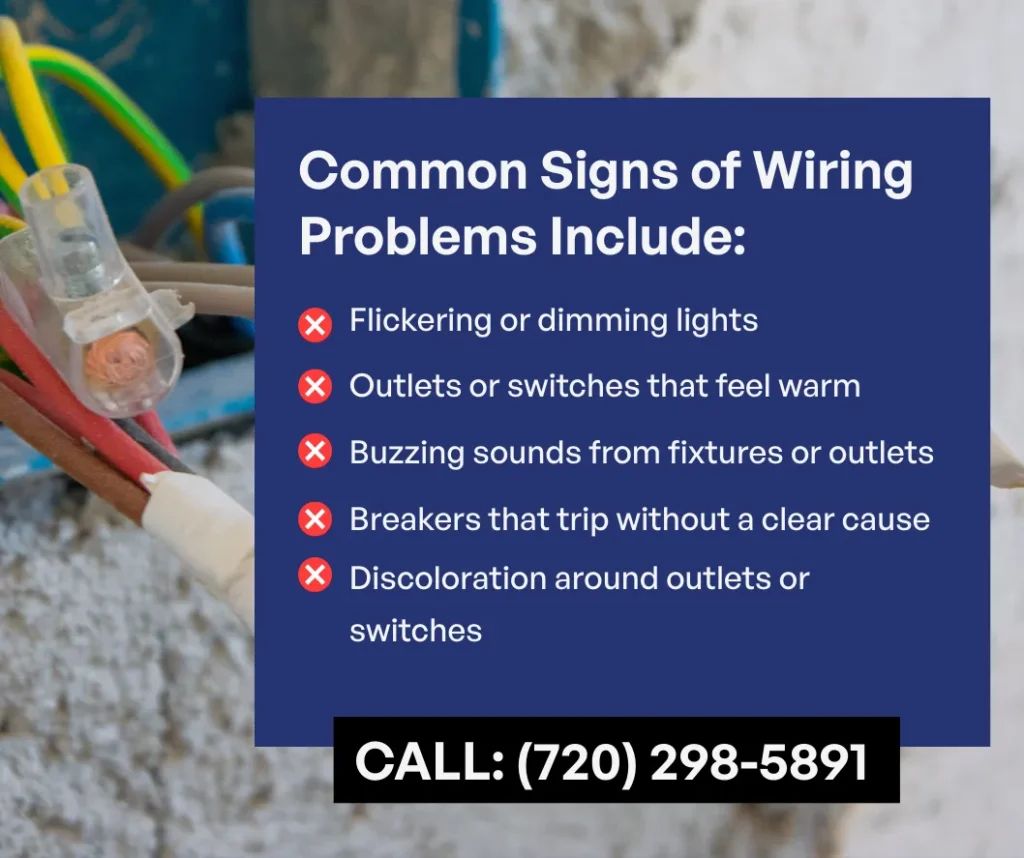
Common signs of wiring problems include:
- Flickering or dimming lights
- Outlets or switches that feel warm
- Buzzing sounds from fixtures or outlets
- Breakers that trip without a clear cause
- Discoloration around outlets or switches
In older Colorado homes, wiring may also lack the capacity needed for today’s appliances or added technology. Updating the wiring helps reduce these issues and brings the system closer to current standards.
Electrical Panel Improvements
The electrical panel is the center of a home’s power distribution. When a panel is outdated or undersized, the system may struggle to keep up with everyday use. This is common in older Colorado homes where the original panel was sized for electrical use that was much lower than what most households require today..
An electrical contractor may recommend electrical panel updates to increase capacity, replace older components, or address issues caused by overloaded circuits.
Improving the panel helps the system distribute power more evenly and reduces strain on wiring throughout the home. It also supports future upgrades, making it easier to add new appliances, remodel, or expand the home without putting pressure on the existing electrical system.
Safety Considerations for Colorado Homes
Many Colorado homes still rely on electrical systems that were installed long before modern standards were in place. An electrical contractor may review areas of the system that show their age or have been modified over the years.
The CT Electrical team can spot older wiring methods, mismatched components, and details that are easy to overlook without a close inspection.
Commercial Electrical Services: Supporting Reliable Workspaces
Commercial buildings depend on electrical systems that can handle steady use and higher demand. To keep these spaces running safely, an electrical contractor may provide a range of services that support daily operations and meet local requirements.
Installation and Electrical Upgrades
Commercial spaces often need electrical updates that support equipment specific to the building’s operations. As businesses grow or spaces change, commercial electrical contractors may be called to install new circuits, adjust wiring during remodels, or add capacity for systems that draw more power.
Standard commercial installation and upgrade work includes:
- Circuits for appliances, machinery, or HVAC equipment
- Wiring adjustments during expansions or tenant build-outs
- Updated lighting systems for offices, hallways, or large shared areas
- Power distribution changes to support new layouts or added workstations
- Service improvements for older properties with limited electrical capacity
These updates allow the building to keep pace with changing needs and maintain stable, reliable electrical performance.
Routine Maintenance
Routine maintenance helps ensure the system continues to perform the way the building requires. During these visits, a commercial electrical contractor may check panels that support multiple areas of the building, confirm that equipment is drawing power correctly, and look for early signs of wear in circuits or connection points.
Tasks include testing emergency lighting, reviewing common-area circuits, and supporting shared systems such as HVAC and refrigeration.
These checks help prevent unexpected outages and reduce the risk of minor issues escalating into service interruptions.
Safety and Code Requirements
Commercial properties must meet safety and code standards that account for the type of equipment and occupancy involved. This includes:
- Proper support for emergency lighting
- Accurate labeling of electrical equipment
- Correct setup of circuits that serve shared areas or higher-demand systems.
The CT Electrical team regularly encounters these needs when working with property managers and other commercial clients. Staying current with safety expectations and electrical codes helps prevent delays during inspections, remodels, or tenant changes and keeps the building ready for routine oversight from local authorities.
When It’s Time to Consider Electrical Updates
Some electrical issues develop slowly, while others appear without much warning. Knowing the early signs helps determine when it is time to contact an electrical contractor for a closer look.
Common indicators include:
- Breakers that trip more often than they used to
- Lights that flicker or dim when equipment or appliances start
- Outlets, switches, or panels that feel warm
- Buzzing sounds from fixtures or electrical components
- Circuits that struggle during routine business activity
- Equipment that does not receive steady power
- New equipment, tenant changes, or remodel plans that add electrical demand
These signs often appear before larger issues occur, making timely updates an important part of keeping a home or commercial space operating safely.
How to Choose an Electrical Contractor You Can Rely On
Selecting the right electrical contractor helps ensure the work is safe and completed to current standards. A few qualities can help guide the decision.
Look for:
- Proper licensing and insurance: confirms the contractor is qualified to perform the work.
- Experience with similar projects: shows they understand the needs of your home or commercial space.
- Clear communication: provides a straightforward explanation of what the job includes.
- A written scope or estimate: outlines expectations and reduces the chance of surprises.
- Warranties or support: offers reassurance that the work will be backed after the job is finished.
These points help homeowners and property managers choose a contractor who follows reliable practices and communicates honestly.

Quality Electrical Work Protects People, Property, and Peace of Mind
From small repairs to significant improvements, quality electrical contracting depends on consistent steps that support safety and reliability. Understanding how assessments, installations, and safety checks work makes it easier to recognize issues early and plan the right updates.
The CT Electrical team uses this same start-to-finish approach in the homes and buildings they service throughout Colorado.
Contact us today if you have questions about your electrical system or need help planning an upcoming project.
