

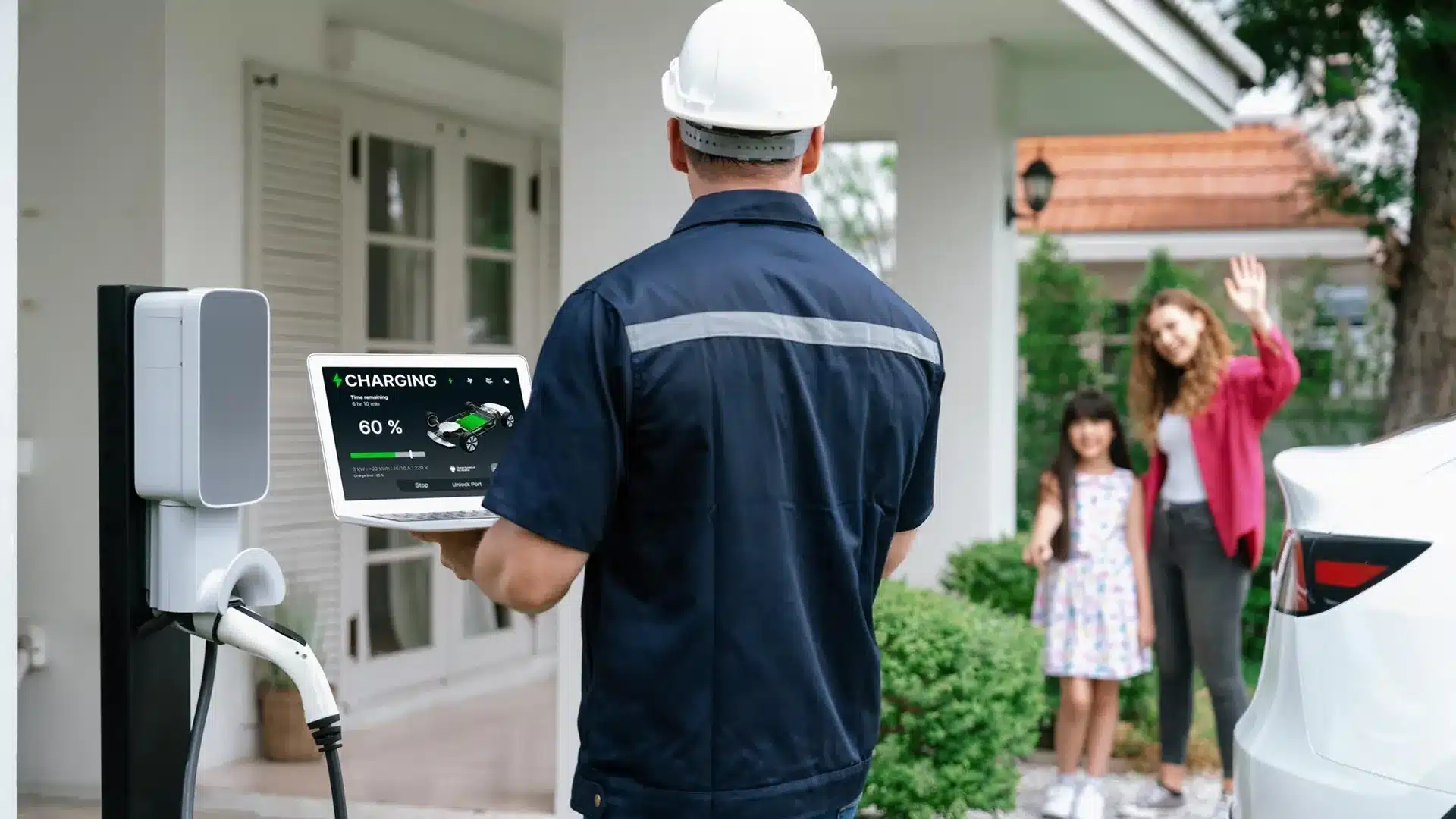
You’ve finally got your dream electric vehicle sitting in the driveway. The garage is ready, and there’s just one thing left to take care of: getting it set up to charge at home.
The problem is that the electrical panel powering the home is more than 50 years old.
It was installed long before EV chargers and many of today’s heavier electrical demands were part of everyday life. Adding a dedicated 240V outlet to the garage means asking that aging panel to handle something it was never designed for.
So, before the charger can go in, the panel has to come out.
The outdated system is replaced, the new 240V outlet is installed, and by the end of the afternoon, the work is done. No second appointment. No return trip. Just a safer electrical system and a garage ready for the vehicle that started it all.
It’s a real experience from a Denver homeowner, and one that raises an increasingly common question:
Does an EV charger installation mean you’ll need an electrical panel upgrade first?
Not necessarily. But your panel’s age, available capacity, and the electrical demands already placed on your home can all help determine what needs to happen before you plug in.
Signs Your Panel May Need an Upgrade for EV Charging
An EV charger adds a significant new electrical load to your home.
For an older panel already operating near its limits, the extra demand may be enough to require an electrical panel upgrade.
But age alone doesn’t determine whether your panel needs to be replaced. Before installing an EV charger, a residential electrician will assess the panel itself, your home’s current power usage, and whether there is enough capacity to safely add the new circuit.
A few things can point to the need for an upgrade:
- Your panel is 50+ years old: Older panels were installed long before EV charging, central air conditioning, and many of the high-demand appliances commonly used in homes today.
- The capacity is 100 amps or less: Many older homes still operate with 100-amp electrical service. Depending on the existing electrical load, you may not have enough capacity for a Level 2 charger.
- The home is older: If your home was built before 1990 and the electrical panel has never been updated, it deserves a closer look before adding another large electrical load.
- You already experience power issues: Breakers that trip when the oven, dryer, and AC are running at the same time can be a sign that the electrical system is already being pushed to its limits.
- There is no room for expansion: A Level 2 charger typically needs its own double-pole breaker. If there are no available spaces in the panel, additional electrical work may be needed.
- It’s a Federal Pacific or Zinsco panel: Both older panel brands have documented safety concerns, including breaker issues, overheating, and internal connections. If either is present, it should be evaluated before adding the electrical demand of an EV charger.
None of these automatically means your panel has to be replaced. A proper load calculation can determine how much electrical capacity your home already uses and whether enough remains to safely support the charger.
Level 1 vs. Level 2 Charging: What It Means for Your Panel
Not every EV charger places the same demand on your home. The biggest difference is whether you’re charging from a standard 120V outlet or a dedicated 240V circuit.
Here’s how the two compare:
| Feature | Level 1 | Level 2 |
| Power Source | Standard 120V outlet | Dedicated 240V circuit |
| Range Added Per Hour | 3 to 5 miles | 20 to 40 miles |
| Panel Work Involved | Typically, none when using an existing outlet | Depends on available panel capacity |
| Best For | Occasional or backup charging | Faster, everyday home charging |
Level 1 charging uses the same type of 120V outlet found throughout your home, making it the simpler option from an electrical standpoint.
A Level 2 charger installation is where things change. The panel needs a dedicated 240V circuit and uses more power. This means it must handle the extra demand along with everything else already running in the home.
For homeowners who want the faster charging that comes with Level 2, panel capacity, circuit size, and the existing electrical load are important considerations when planning the installation.
5 Things Your Home Needs for a Level 2 Charger Installation
Added power makes a Level 2 charger installation different from simply plugging into a standard outlet. There is more occurring behind the charger itself, from the circuit that supplies it to the capacity available in your electrical panel.
Here is what needs to be considered before installation:
1. A Dedicated 240-Volt Circuit
Level 2 chargers operate at 240 volts rather than the standard 120 volts supplied by a typical household outlet. Most home chargers draw between 32 and 48 amps continuously, so the dedicated circuit is typically sized between 40 and 60 amps.
That circuit needs its own breaker and wiring sized appropriately for the charger.
2. Enough Spare Capacity in the Panel
Physical space for the new circuit is one consideration. Available electrical capacity is another.
A licensed electrician conducts a load calculation to evaluate the home’s power requirements and determine whether the electrical panel can accommodate the charger’s additional demand. This method offers a clearer understanding than relying on the panel’s rating or the home’s age.
Modern 150- to 200-amp panels generally provide more headroom for additional electrical loads, but every home needs to be evaluated individually.
3. Denver’s Electrical Code and EV-Ready Rules
Installing an EV charging station in Denver also requires compliance with local electrical requirements. Denver enforces the 2023 National Electrical Code (NEC) for panel and circuit work.
The Denver Energy Code also includes EV-ready requirements for new homes and new or added garages, including at least one EV-ready space with a 240V, 40-amp circuit and a designated location in the electrical panel.
For existing homes that lack an EV-ready space, achieving this may require adding an appropriate circuit and possibly upgrading the electrical panel, depending on the current system.
Any new circuit or panel work also requires a City and County of Denver electrical permit and inspection.
4. The Right Charger and Wiring Setup
Level 2 chargers can connect through a plug-in outlet, commonly a NEMA 14-50, or be hardwired directly to the circuit.
Hardwired connections can support higher continuous amperage, and some charger manufacturers require hardwiring for certain models or warranty coverage. This makes it worth checking the charger’s installation requirements before the electrical work begins.
Location matters, too. The farther the charger is from the electrical panel, the more wiring and conduit may be required. A longer or more complex route to the garage or driveway can also increase the labor required for installation.
5. Breaker Sizing and Safety Requirements
Breaker sizing is based on the charger’s continuous amperage. NEC requirements account for 125% of that draw, so a charger drawing 40 amps, for example, requires a circuit rated for at least 50 amps.
Level 2 installations can also require GFCI protection, and the charging equipment itself should be UL-listed for safety.
These aren’t simply extras added to an installation. They’re part of ensuring the charger, circuit, and electrical panel work together safely and meet the requirements verified during inspection.
What to Expect When You Call CT Electrical
Getting your home EV-ready starts with knowing what your electrical system can handle.
CT Electrical Services evaluates your panel first. If an electrical panel upgrade is needed, our team can handle the panel, dedicated circuit, permitting, and charger installation as part of the same project.
When searching for an electrician nearby, it’s important to ensure the work is done properly and is backed by a guarantee once it’s complete.
CT Electrical is licensed and insured, with a 10-year warranty on panel upgrades and a 1-year warranty on other electrical work. There are also no upfront costs. You don’t pay until the job is done.
Ready to get your garage EV-ready? Request your free estimate today.
