

From Halloween lights and animatronics to bright winter holiday displays, there are plenty of reasons to plug in and decorate as the year winds down. But between light strands, inflatables, timers, and other powered decorations, your home’s outdoor outlets and circuits may be working harder than usual throughout the season.
October is a great time to get a head start, especially here in Denver, where colder temperatures and unpredictable winter weather can arrive quickly. Taking a little time now to inspect your lights, cords, outdoor outlets, and connections can make decorating easier while helping you avoid overloaded circuits, tripped breakers, and other electrical issues later in the season.
5 Outdoor Lighting Safety Tips for a Safe Holiday Display
A little planning before you start decorating can make a big difference once your display comes together. Whether you’re putting up a few strands of lights or planning something more elaborate, these five tips can help you spot potential problems and make safer choices along the way.
1. Inspect Lights and Decorations Before They Go Outside
Before you start hanging lights or setting up decorations, take a few minutes to look everything over. After months in storage, light strands, extension cords, timers, inflatables, and animatronics may not be in the same condition they were when you packed them away.
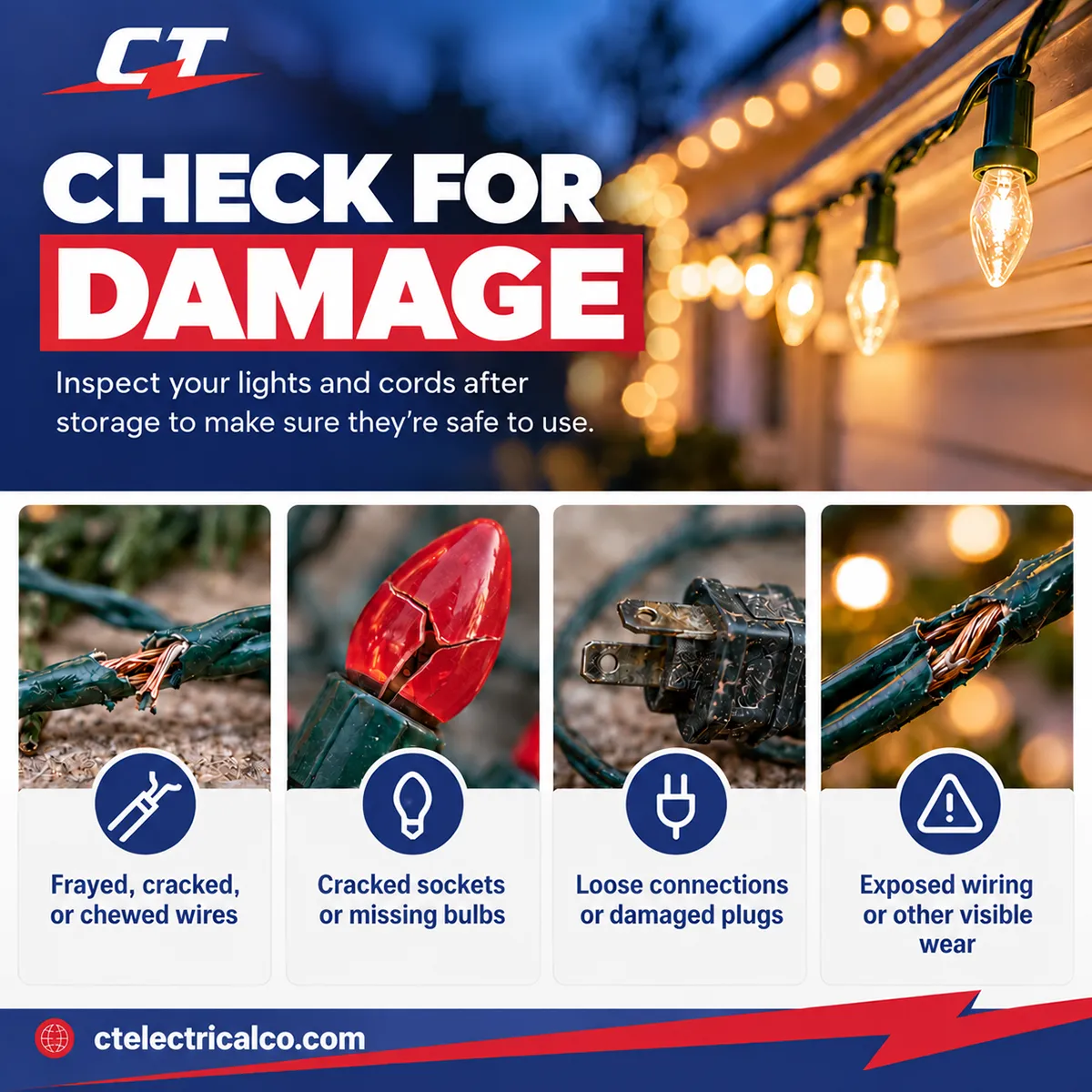
Look for signs of damage such as:
- Frayed, cracked, or chewed wires
- Cracked sockets or missing bulbs
- Loose connections or damaged plugs
- Exposed wiring or other visible wear
While you’re checking everything, review the labels and packaging to make sure anything you plan to use outside is actually rated for outdoor use.
Indoor lights, extension cords, and electrical decorations aren’t designed for the same exposure to moisture and changing weather conditions.
If a light strand, cord, or electrical decoration is damaged, don’t try to patch it up or rely on a temporary fix. Replace it before adding it to your display. The small cost of a replacement is worth it to avoid the electrical and fire risks that can come with damaged wiring.
2. Choose LEDs and Follow Manufacturer Guidelines
If you’re still using older incandescent light strands, consider making the switch to LEDs. ENERGY STAR-certified decorative light strings use approximately 92% less energy than conventional incandescent light strings and stay cooler to the touch.
LEDs also draw less power, which can help reduce the demand your holiday lighting puts on a circuit. Just remember that every product has its limits. Before connecting multiple strands end-to-end, check the manufacturer’s instructions and stick to the recommended number.
The same goes for other powered decorations. Check the electrical requirements before plugging several items into the same outlet or circuit.
3. Use Extension Cords, Timers, and Connections Safely
Extension cords and timers can make it easier to power an outdoor display, but they must be used safely and for their intended purpose. Keep these basics in mind:
- Use only extension cords and timers that are rated for outdoor use.
- Never run cords under rugs, through doorways, or out of windows where they can be pinched or damaged.
- Keep plugs and connections elevated and away from standing water, snow, and snowmelt.
- Avoid daisy-chaining multiple extension cords together. Instead, use a properly rated outdoor extension cord that is long enough to reach the power source.
If you rely heavily on extension cords to power your display, your outdoor electrical setup may not have enough conveniently placed outlets. A properly installed outdoor receptacle can provide a safer, more permanent power source.
4. Check Your Outdoor Outlets and GFCI Protection
Outdoor holiday lighting should be plugged into GFCI-protected outlets. GFCIs are designed to quickly shut off power when they detect a ground fault, providing important protection in situations involving electricity and outdoor moisture.
Before decorating, take a few minutes to test your exterior GFCI outlets using the “Test” and “Reset” buttons. Pressing “Test” should cut power to the outlet, while “Reset” should restore it. If the outlet doesn’t respond as expected, stop using it and have a licensed electrician take a look.
While you’re there, check that your outdoor outlets and covers are in good condition and provide the proper weather protection. Cracked covers, damaged receptacles, or outlets exposed to rain and snow should be addressed before you plug in your display.
5. Know Your Circuit Limits and Watch for Overloads
It doesn’t take long for a holiday display to grow from a few strands of lights to inflatables, animatronics, and other powered decorations.
Most household circuits are rated for 15 or 20 amps, so there is a limit to how much they can safely handle at one time.
Before adding more to your display, check the power requirements listed on your decorations and consider what else may be running on the same circuit. Keep in mind that multiple outlets can share one circuit, so plugging decorations into different outlets doesn’t always spread out the electrical load.
If your breaker starts tripping after the decorations go up, don’t ignore it or keep resetting it. Scale back what you have plugged in and take it as a sign that the circuit may be carrying more than it can safely handle.
When Holiday Lighting Points to a Larger Electrical Problem
Putting up a holiday display can bring attention to electrical issues that weren’t as noticeable before. Adding more lights and powered decorations doesn’t necessarily cause the underlying problem, but the extra demand can make existing issues easier to spot.
Pay attention if you notice:
- Breakers that continue to trip even after reducing the number of decorations
- Outdoor outlets that stop working or only work intermittently
- Lights that flicker or dim when larger decorations turn on
- Outlets, plugs, or switches that feel unusually warm
- Buzzing, crackling, or other unusual sounds around outlets or electrical equipment
These common electrical warning signs can point to something beyond the holiday display itself. A residential electrician can determine whether the issue is with an outlet, wiring, circuit, or another part of the electrical system.
For Denver homeowners, having these issues checked before winter weather sets in can help ensure the electrical system is ready for both seasonal decorations and everyday household demand.
Prepare Your Home Before the Holiday Rush
If your holiday decorating plans are putting more demand on your electrical system than it can safely handle, don’t ignore the warning signs just to keep the display running. Instead, have the issue checked by licensed experts.
Whether you need additional outdoor outlets, GFCI protection, help with overloaded circuits, or an electrical panel upgrade for a home that needs more capacity, CT Electrical Services can help you find the right solution.
Get ahead of the holiday rush and Colorado’s colder weather.
Contact CT Electrical Services to make sure your outdoor electrical setup is ready for a safe and bright season.
