

It’s a normal evening. Dinner’s half finished, the dishwasher is running, and someone turns on the microwave.
The lights dip for a split second. Not enough to shut everything off. Just enough to notice.
You pause, waiting to see if it happens again.
Nothing happens.
So you move on.
Later that night, the breaker trips. You reset it, everything comes back on, and the house feels normal again. No smoke. No sparks. No obvious problem. Just a quiet reminder that something isn’t quite right.
Lying in bed, you run through the same questions most homeowners do:
Is this something that can wait, or is this the kind of situation where you should have called in an emergency electrician?
This uncertainty is where electrical emergencies usually begin. Not with panic, but with hesitation. Small warnings that are easy to dismiss until they aren’t.
What is Considered an Electrical Emergency?
An electrical issue crosses into “emergency” territory when it involves active risk, loss of control, or conditions that can worsen without warning.
In a home, that often means:
- Power problems that affect safety systems, heating, or essential appliances
- Signs that wiring or components are overheating
- Electrical behavior that is unpredictable or keeps repeating after being reset
What makes these situations difficult is that they do not always look dramatic. A breaker that trips once may not be an urgent issue. A breaker that keeps tripping after being reset is different. The risk is not the inconvenience. The risk is what is happening behind the walls.
For homeowners, the line is usually this:
If the problem makes you hesitate to touch anything, leave the area, or wonder whether resetting something is safe, treat it as an electrical emergency.
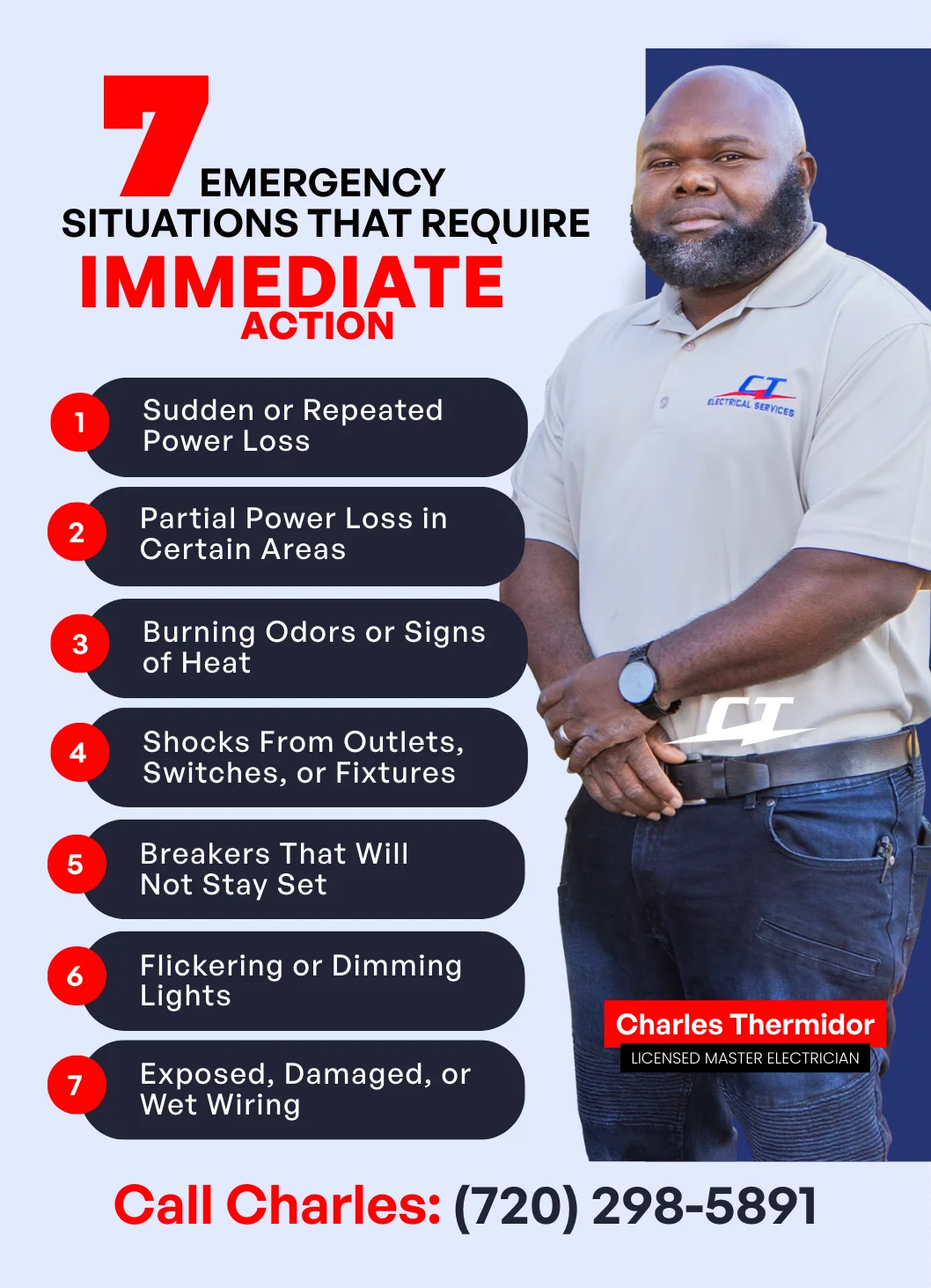
7 Critical Situations That Require Immediate Action
Certain electrical issues indicate severe underlying problems that should never be ignored. They tend to surface quietly at first, before becoming impossible to miss.
1. Sudden or Repeated Power Loss
A single power outage can be related to the utility. Power loss that keeps happening, returns shortly after being restored, or affects the home inconsistently is different. These patterns often indicate stress within the electrical system, such as overloaded circuits or failing components.
The concern here is not just the outage but also its unpredictability. Systems that cannot maintain stable power tend to worsen over time.
2. Partial Power Loss in Certain Areas
This kind of partial outage is rarely random. It typically indicates issues such as loose connections, damaged wiring, or problems in the electrical panel. Because the rest of the home may seem unaffected, this situation is easy to dismiss, even though it can indicate a serious underlying problem.
3. Burning Odors or Signs of Heat
Electrical systems should never emit noticeable odors or excessive heat. When an outlet, switch, or panel feels warm or emits an unusual odor, it usually indicates that something is overheating behind the walls.
Heat buildup can occur gradually and without visible signs. This makes burning odors or heat one of the most important warning signs not to ignore.
4. Electrical Shocks From Outlets, Switches, or Fictures
Feeling a shock when touching an outlet, switch, or light fixture is a clear sign that something is wrong. Even mild shocks can indicate grounding issues, damaged wiring, or moisture intrusion.
These conditions increase the risk of injury and signal that the electrical system is no longer operating safely.
5. Breakers That Will Not Stay Set
Circuit breakers are designed to trip to protect the system. When a breaker trips repeatedly or does not stay on after a reset, it is indicating an ongoing issue.
This often indicates overload, equipment failure, or wiring issues. Treating repeated trips as a nuisance instead of a warning removes an important layer of protection.
6. Flickering or Dimming Lights
Lights that flicker or dim without a clear cause are often a sign of unstable voltage or overloaded circuits. While the lights may still function, the behavior suggests stress within the system.
Loose connections and strained wiring can generate heat over time, making this situation more than just an inconvenience.
7. Exposed, Damaged, or Wet Wiring
Wiring should always be protected, insulated, and dry. When wires are frayed, exposed, or water-damaged, conditions can become dangerous very quickly.
Moisture and damaged insulation increase the risk of shock and system failure, particularly in basements, garages, and outdoor areas. These situations should always be treated as urgent.
What to Do in the First Minutes of an Electrical Emergency
When an electrical issue feels urgent, the first few minutes matter. The goal is not to diagnose the problem or attempt a fix. It is to reduce risk until a licensed electrician can safely assess what is happening.
Shut Off Power if It Is Safe to Do So
If you can safely access your electrical panel without standing in water or touching hot or damaged components, turning off the affected breaker or the main power can help limit further damage.
If the panel feels warm, smells unusual, or shows visible damage, do not attempt to touch it. In those cases, leave the area and seek professional help.
Avoid Touching Outlets, Wiring, or Panels
Electrical emergencies often involve hidden damage. Even if something looks intact, internal components may be compromised.
Avoid touching outlets, switches, cords, or fixtures that appear damaged, warm, or wet. Do not attempt temporary fixes or resets beyond shutting off power.
Keep People and Pets Away From the Area
If an electrical issue is localized to one room or area, limit access until it can be properly inspected. Children and pets should be kept away from outlets, cords, and panels involved in the issue. This is especially important when there are signs of heat, exposed wiring, or moisture.
Never Try to Diagnose the Problem Yourself
Electrical systems are interconnected. What appears to be a simple issue can be part of a larger problem elsewhere in the system.
At this point, guessing or experimenting can increase risk. Electrical emergencies are best evaluated by a licensed electrician with the tools and experience to identify the cause safely.
How Emergency Electrical Calls Are Handled
Once the immediate risks are under control, the next concern is usually what happens after the call is made. While every situation is different, emergency electrical calls tend to follow a similar process when handled by licensed electricians.
Initial Assessment and Safety Check
Emergency electricians begin by identifying any immediate hazards. This includes checking for heat, damaged wiring, water exposure, or unstable power conditions.
The first priority is safety. Before any repairs are made, the electrician works to stabilize the situation and prevent further risk to people, property, or the electrical system itself.
Identifying the Source of the Problem
Electrical issues often present symptoms in one location while originating elsewhere. A flickering light, for example, may trace back to a loose connection in the panel or wiring behind the walls.
Licensed electricians use testing tools and experience to determine whether the issue is isolated or part of a larger system problem. This step is critical, as treating only the symptom can allow the underlying issue to continue.
Clear Explanation of Findings
Once the cause is identified, the electrician explains what is happening in plain language. Homeowners should understand:
- What caused the issue
- Why its considered an emergency
- What needs to be addressed immediately versus what can be scheduled
Reputable emergency electricians prioritize clarity over pressure, helping homeowners make informed decisions during a stressful situation.
Performing Necessary Emergency Repairs
Emergency work typically focuses on restoring safety and stability. This may include repairing damaged wiring, replacing failed components, or shutting down unsafe circuits.
Any additional work that is not urgent is usually discussed separately, allowing homeowners to plan next steps without feeling rushed.
What This Looks Like in Practice
Local, licensed electrical companies such as CT Electrical Services follow this approach by prioritizing safety first, clearly explaining findings, and addressing emergencies without pushing unnecessary repairs.
This process helps ensure that emergency calls resolve the immediate risk while laying the groundwork for long-term reliability.
Handling Electrical Emergencies with CT Electrical Services
Electrical emergencies are not just about restoring power. They are about ensuring a situation is safe, understood, and handled correctly before it worsens.
CT Electrical Services approaches emergency calls with that priority in mind. Every situation is assessed by licensed electricians, who first focus on stabilizing the issue, then identify the cause, and explain what needs attention now versus what can be addressed later. That clarity matters when decisions need to be made quickly.
If you’re dealing with an electrical issue that feels urgent or unsafe, it’s time to involve a licensed emergency electrician. CT Electrical Services is available 24/7 to respond to electrical emergencies throughout the Denver area.
Contact us today with your questions.
Emergency Electrical Service FAQs
An electrical issue is generally considered an emergency when it poses an active risk, causes a loss of power that affects safety, or could worsen without warning. This includes repeated power loss, burning odors, electrical shocks, exposed or wet wiring, or breakers that will not stay set.
If a problem makes you hesitate to touch anything or creates safety concerns, it should be treated as urgent.
Resetting a breaker once can be reasonable if there are no other warning signs. If the breaker trips again, feels warm, or will not stay set, it is responding to an ongoing issue.
Repeatedly resetting a breaker without understanding the cause can increase risk and should be avoided.
Electrical overheating does not always produce visible smoke. If the smell cannot be clearly traced to an appliance, it may be coming from wiring, outlets, or the electrical panel.
In these cases, turning off the power if it is safe to do so and contacting a licensed electrician are the safest courses of action.
Yes. Many electrical emergencies occur while power is still flowing. Flickering lights, heat, shocks, or partial outages can all indicate unsafe conditions even when electricity appears to be working.
Visible failure is not required for an electrical issue to be serious.
Providing clear details helps speed up response and improve safety. Useful information includes:
- What you noticed and when it started
- Whether power is fully or partially out
- Any signs of heat, odor, or moisture
- Whether you have already shut off power
You do not need to diagnose the issue. Describing symptoms is enough.
Emergency electrical situations often involve hidden damage or system-wide issues. Licensed electricians are trained to assess risk, identify causes safely, and ensure repairs meet current code requirements.
This helps prevent repeat failures and reduces long-term safety concerns.
CT Electrical Services provides 24/7 emergency electrical support for homes and businesses in the Denver area. Emergency calls are handled by licensed electricians and focus on stabilizing unsafe conditions, identifying the cause of the issue, and restoring safety as quickly as possible.
There is no upfront payment required for emergency work, and all repairs are backed by clear warranties for added peace of mind.
