

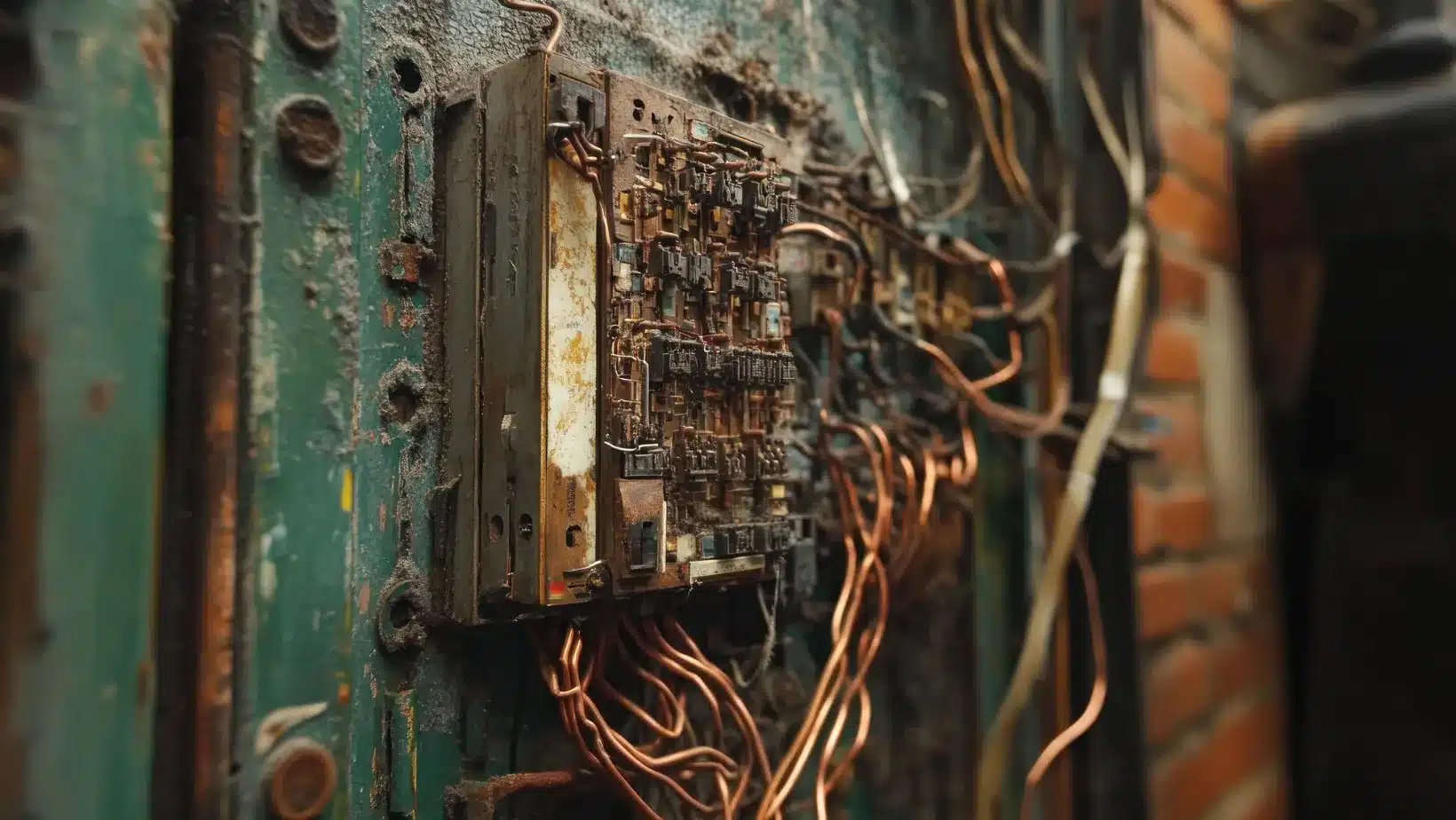
You’re in the middle of selling your home when the inspection report comes back with a note you weren’t expecting: “electrical panel concerns.”
Whether you’re selling, refinancing, or buying, this kind of comment can complicate things.
It’s usually not the lights, outlets, or appliances that raise questions first. It’s the panel itself.
Older equipment like fuse boxes, Federal Pacific (FPE), Zinsco, or panels that have been pushed beyond their limits tend to show up quickly during inspections. These aren’t just technical notes. They can slow down a sale, complicate refinancing, or create issues with insurance coverage.
Some systems have documented failure rates. Others were never designed for modern electrical demand. And in some homes, years of small changes have added up to a system that no longer meets current expectations.
Here’s a closer look at the most common home inspection electrical problems tied to old panels, why they get flagged, and what they mean for your next step.
Will an Old Electrical Panel Fail My Home Inspection?
An old electrical panel does not automatically fail a home inspection.
However, outdated or overloaded systems are often flagged as safety concerns that may need to be addressed before a sale, refinance, or insurance policy can move forward.
Home inspections are not based on a simple pass-or-fail. Inspectors document what they see, noting safety risks, outdated equipment, and anything that may require further evaluation.
Inspectors tend to call out certain systems and configurations for further review.
Typical inspection notes often include:
- “Original fuse box in service – recommend evaluation or upgrade by a licensed electrician.”
- “Federal Pacific ‘Stab-Lok’ panel present – known safety concerns, recommend replacement.”
- “Zinsco or Sylvania panel present – documented failures, recommend replacement.”
- “Panel appears undersized or overloaded; multiple tandem or double-tapped breakers; evidence of overheating.”
While these notes don’t automatically halt a real estate transaction, they often require fixing before the process can proceed.
5 Home Inspection Electrical Problems Caused by Old Panels
Inspectors, lenders, and insurers all focus on the same core concerns: fire risk, code compliance, and whether the system can safely support modern electrical demands.
Certain panel types and conditions are more likely to trigger inspection comments, insurance requirements, or delays during a sale or refinance.
1. Outdated Fuse Boxes That Can’t Keep Up
Fuse boxes are one of the most common issues found in older homes. Instead of using circuit breakers, they rely on fuses that must be replaced when they blow. They were not designed to handle the electrical demands of modern households.
Inspectors often flag fuse boxes for limited capacity, inconsistent modifications over time, and the difficulty of safely maintaining or upgrading the system. In many cases, these systems have been modified over time with oversized fuses or improper replacements that bypass intended safety limits.
From an inspection and insurance standpoint, the concern is whether the system can reliably support today’s appliances, electronics, and overall load without overloading circuits or creating fire hazards.
As a result, fuse boxes are frequently noted for further evaluation, and in some cases, replacement may be recommended before moving forward with a sale or coverage.
2. Federal Pacific (FPE) “Stab-Lok” Panels Flagged as Fire Risks
Federal Pacific “Stab-Lok” panels are commonly identified during inspections due to a history of breakers failing to trip under overload or short-circuit conditions. When breakers fail to trip as intended, wiring can overheat without the power being shut off.
Because of these known issues, inspectors often call for these panels to be replaced rather than repaired. Insurance providers may also take a stricter position, sometimes requiring replacement before issuing or renewing coverage.
3. Zinsco and Sylvania Panels With Hidden Failures
Zinsco and Sylvania panels are often flagged during inspections because they have a history of failing to power down when they should, allowing electrical problems to persist. Over time, this can lead to overheating inside the panel or damaged components within the system.
These panels are commonly noted in inspection reports, and in many cases, replacement is recommended rather than repair. Switching to a modern, code-compliant panel makes it easier for inspectors and insurance providers to proceed without additional concerns.
4. Undersized or Overloaded Panels in Older Homes
Many older homes were built with 60-amp or 100-amp panels, long before central AC, EV chargers, hot tubs, and fully finished basements became common. As electrical demand increases, these panels are often pushed beyond their original design capacity.
A few signs inspectors look for include:
- Frequent breaker trips
- Multiple tandem breakers
- Double-tapped connections
- Discoloration around the breakers or the panel cover
In these cases, a panel upgrade is often recommended to better meet the home’s current electrical needs and avoid ongoing issues.
5. DIY Modifications, Double Taps, and Code Violations
Even newer panels can be flagged during inspections if they’ve been altered by DIY work or unpermitted changes. These modifications often fall outside of code requirements and can create safety concerns within the system.
Common issues include:
- Double-tapped breakers
- Mixed aluminum and copper conductors
- Missing clamps
- Open knockouts
These findings are documented as code and safety concerns, and lenders or insurance providers often require licensed repairs before moving forward with a sale or coverage.
In many cases, a licensed electrician can correct these issues in a single visit and bring the panel back into compliance.
Will a Panel Upgrade Clear Insurance and Inspection Roadblocks?
Yes, in most cases, upgrading to a modern, code-compliant panel is the step needed to resolve flagged issues. A permitted electrical panel upgrade completed by a licensed electrical contractor provides documentation that the work meets current standards.
Benefits of upgrading include:
- A safer system that can support current electrical demands
- Fewer issues during inspections and appraisals
- Smoother approval from insurance providers and lenders
- Greater confidence for buyers during a sale
Upgrade Your Electrical Panel With CT Electrical Services
Many electrical problems in home inspections trace back to the panel, especially in older homes.
If your electrical panel has been flagged during an inspection or insurance review, addressing it early can help avoid delays and keep things moving forward.
CT Electrical Services provides code-compliant panel upgrades completed by licensed electricians, with proper permitting and clear, straightforward communication throughout the process.
Contact us today to schedule an evaluation and get a clear path forward.
