

Energy costs directly impact the bottom line for commercial properties across Colorado.
For HOAs, hotels, office buildings, and multi-tenant facilities, rising utility expenses can quietly reduce profitability year after year.
When electrical systems are outdated or poorly balanced, buildings use more power than necessary. Aging panels, inefficient lighting, overloaded circuits, and inconsistent controls may still function, but they often waste energy.
Over time, these hidden inefficiencies increase expenses, strain equipment, and affect tenant experience. A proactive approach to commercial energy efficiency helps protect your infrastructure and keep operating costs predictable.
How Does a Commercial Electrician Improve Energy Efficiency?
Commercial energy efficiency starts with understanding how your electrical system performs as a whole. A commercial electrician evaluates infrastructure, capacity, and compliance before recommending improvements.
A professional review typically includes:
- System-Wide Performance Evaluation: Assess how power is distributed across the building, not just isolated problem areas.
- Load and Panel Capacity Analysis: Identify overloaded circuits, outdated panels, or limitations that restrict tenant improvements and expansion.
- Lighting System Review: Evaluate fixture types, runtime patterns, and opportunities for improved efficiency.
- Code Compliance Verification: Confirm systems meet current electrical standards to reduce liability and inspection concerns.
- Infrastructure Planning For Future Demand: Prepare for remodels, EV charging, HVAC upgrades, and additional tenant load.
- Operational Risk Reduction: Flag early warning signs such as overheating components, breaker failures, or aging distribution equipment.
Instead of reacting to outages or failures, this proactive approach allows property managers and business owners to make informed decisions that support long-term stability and cost control.
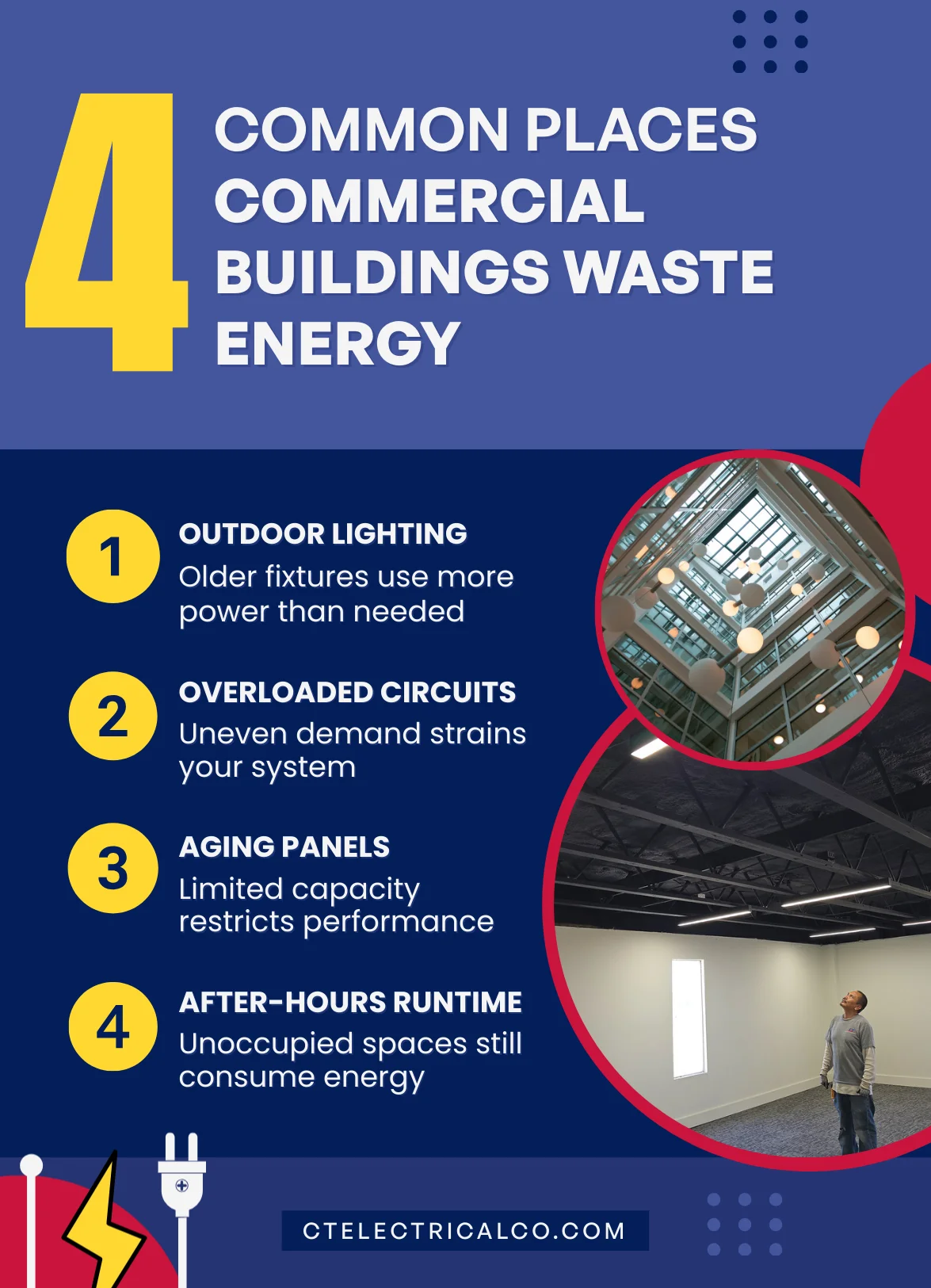
4 Places Commercial Buildings Commonly Waste Energy
A professional review often reveals similar patterns across commercial properties. While every building is different, certain inefficiencies recur across offices, retail spaces, hospitality facilities, and multi-tenant buildings.
Most energy loss does not come from a single major failure. It comes from common problem areas that are easy to overlook during day-to-day operations.
Here are four places commercial buildings tend to waste energy:
1. Outdated Lighting Systems
Lighting is one of the most consistent energy expenses in a commercial building. If your fixtures are older, there is a good chance they are using more power than they should.
Fluorescent systems installed years ago may still work, but performance declines over time. Ballasts wear down, light output becomes uneven, and certain areas may appear dim while others are overly bright. These small issues are easy to ignore, yet they quietly increase energy use.
Thanks to fixed lighting schedules, commercial spaces often leave lights on even when nobody is around.
When lighting systems begin to operate inefficiently, there are usually clear indicators. You may notice signs such as:
- Flickering or inconsistent brightness
- Lights running in low-traffic areas
- Frequent ballast or bulb replacements
- Fixtures that generate noticeable heat
Individually, these problems seem minor. But across an entire property? They can significantly increase operating costs.
2. Imbalanced or Overloaded Circuits
Lighting issues are easy to see. Circuit strain? Not so much.
In many commercial buildings, electrical demand increases over time. New equipment gets installed. Tenant spaces are reconfigured. Additional HVAC loads are added. But the underlying distribution system is not always adjusted to match.
When circuits are unbalanced, certain areas of the system carry more load than they were designed to handle.
Common indicators of imbalanced or overloaded circuits include:
- Breakers that trip more often than they should
- Equipment that shuts off unexpectedly
- Panels that feel unusually warm to the touch
- Inconsistent performance from HVAC or other large systems
These problems place unnecessary stress on your infrastructure. Excess heat and repeated interruptions reduce equipment lifespan and increase the likelihood of costly repairs.
3. Aging Panels and Distribution Equipment
Electrical panels are the backbone of a commercial building’s power system. When they are outdated, everything connected to them is affected.
Many properties are still operating with panels installed decades ago. While they may continue to function, they were not designed for today’s electrical demand.
Modern HVAC systems, expanded tenant build-outs, IT infrastructure, kitchen equipment, and EV charging stations all place additional strain on older distribution equipment.
As demand increases, aging panels can become a bottleneck.
They may lack the capacity for upgrades, respond poorly under stress, and generate unnecessary heat as components age. In many cases, this limits what the building can support in the future.
4. After-Hours Energy Use
Not all energy waste comes from equipment failure. In many commercial buildings, it comes from systems simply running longer than necessary.
Fixed schedules, outdated controls, and inconsistent oversight often mean lighting and equipment remain on even when spaces are unoccupied. Over time, those extra hours of runtime add up.
Common examples include:
- Interior lighting left on overnight
- Exterior lighting running longer than required
- Office equipment powered on in unused areas
- HVAC systems operating in low-occupancy periods
Individually, these inefficiencies may seem minor. Across an entire property, they contribute to measurable increases in monthly utility costs.
How a Commercial Electrical Assessment Identifies Energy Waste
After reviewing common problem areas, the next step is understanding how they show up in your specific building. A commercial electrical assessment provides that clarity.
Rather than relying on assumptions, the process focuses on how your system performs under normal operating conditions.
A typical commercial electrical assessment includes:
Load Review
- Analyze how power is distributed throughout the facility
- Identify imbalances between circuits
- Compare current usage to available panel capacity
Lighting Evaluation
- Review fixture types and energy draw
- Assess runtime patterns and scheduling
- Identify areas with excessive or unnecessary operations
Panel and Distribution Inspection
- Confirm adequate capacity for current demand
- Check for overheating components or loose connections
- Review breaker condition and overall system stability
Code and Safety Review
- Verify compliance with current electrical standards
- Identify issues that could affect inspections or insurance
- Flag conditions that increase operational risk
This process helps property managers and business owners understand where energy is being lost and which areas deserve closer attention.
Protect Your Property and Control Operating Costs
Energy efficiency understands how your building uses power and corrects what is quietly draining your budget.
Commercial electrical services, such as an electrical assessment gives you clarity. It shows where energy is being wasted, where infrastructure may be strained, and which steps will have the greatest impact on reliability and cost control.
For property managers and business owners across the Denver area, small improvements today can prevent expensive disruptions tomorrow.
If you want a clear picture of how your commercial electrical system is performing, schedule a consultation with CT Electrical Services. We’ll walk your property, evaluate your system, and provide straightforward recommendations you can trust.
Contact us today to schedule a consultation.
