

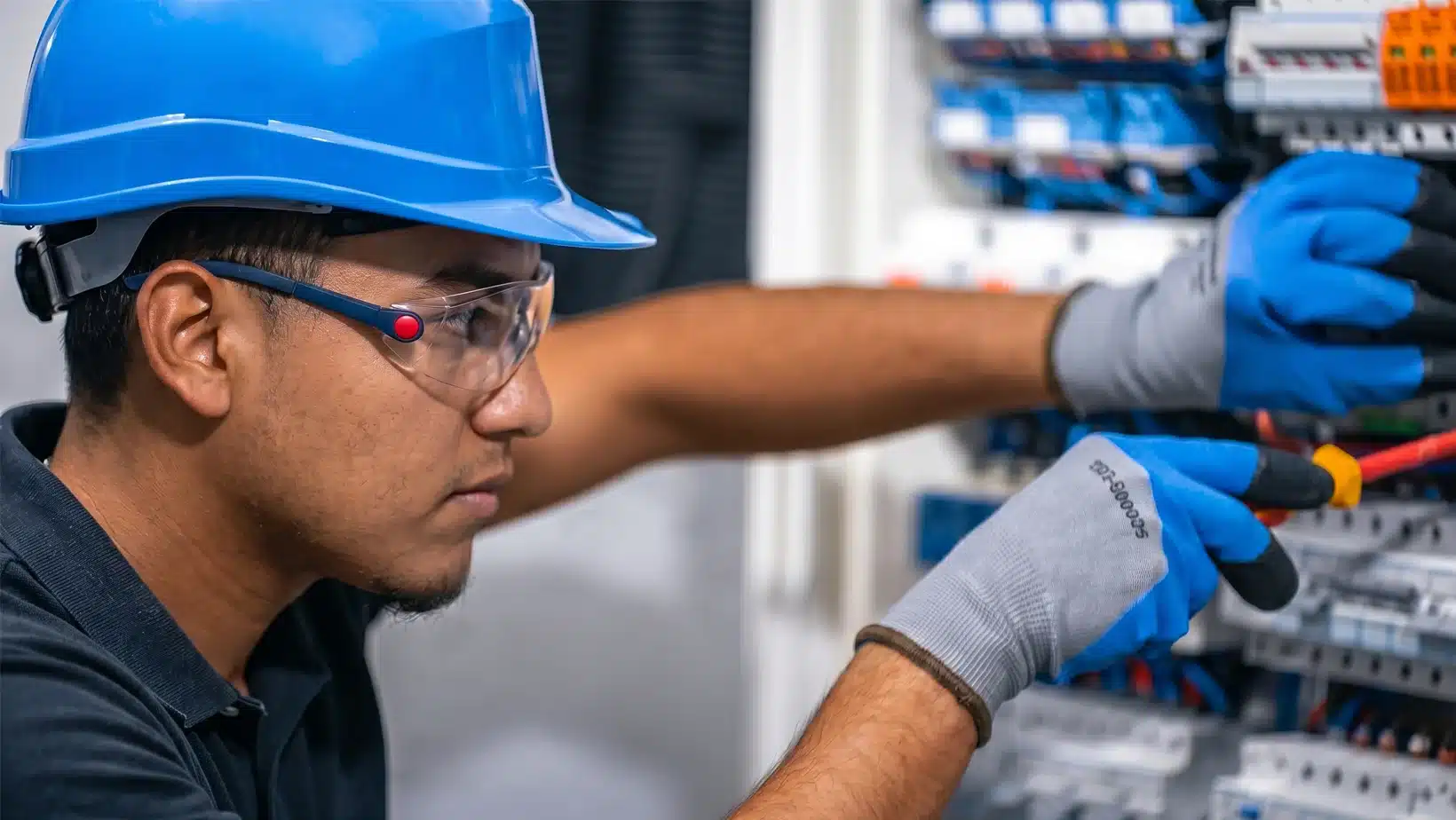
You decide it’s finally time to install an EV charger, finish the basement, or add power to a detached garage.
Then an electrician mentions something you weren’t expecting…
Your electrical panel may need attention first.
As you start researching options, two solutions keep coming up: a panel upgrade or a subpanel installation.
While they may sound similar, they solve very different problems. In some homes, a panel upgrade is necessary to support additional electrical demand. In others, a subpanel install provides the extra circuit space needed without replacing the main panel.
The right choice depends on your home’s existing electrical system, plans, and available capacity.
Before making assumptions, it helps to understand what each option does and when it makes the most sense.
What Is the Difference Between a Panel Upgrade and a Subpanel Install?
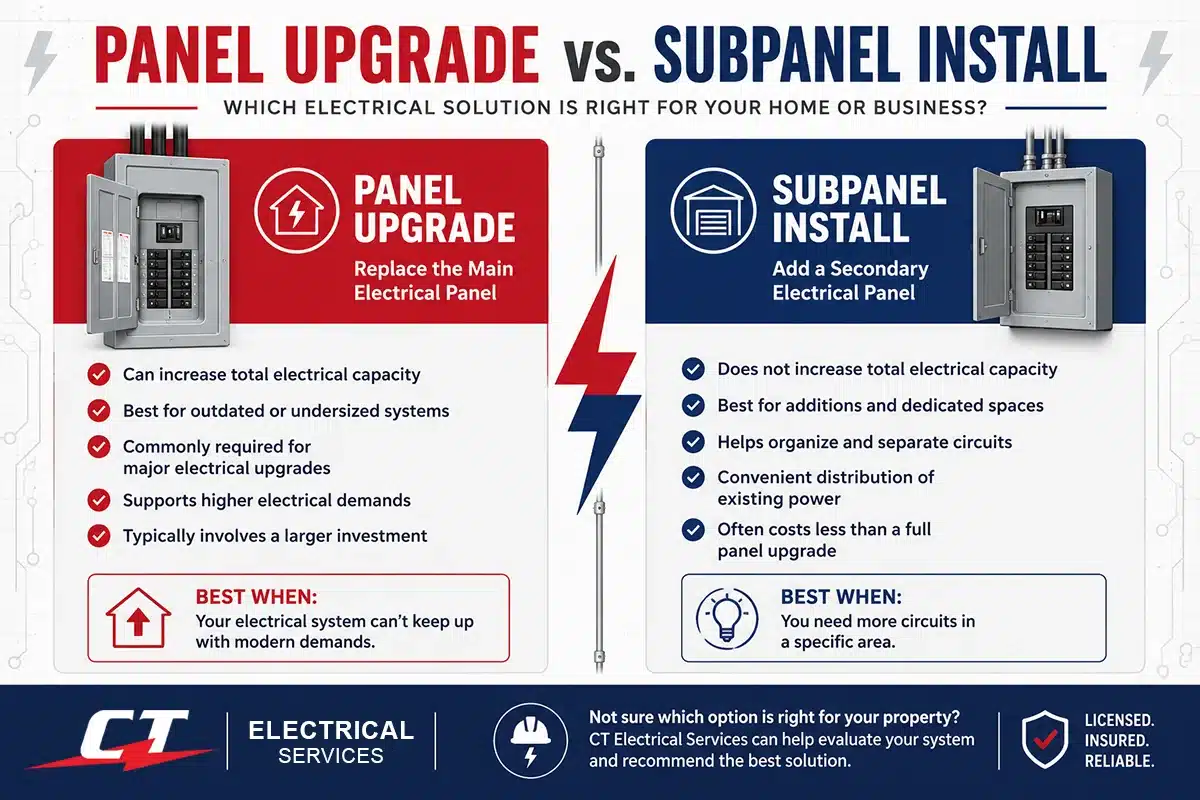
While both options address electrical capacity concerns, they serve different purposes. A panel upgrade increases your home’s overall electrical capacity, while a subpanel install creates additional space for circuits. Understanding the difference is the first step toward choosing the right option.
What Is a Panel Upgrade?
An electrical panel upgrade replaces your home’s main panel and may increase the amount of electricity your home can safely handle, especially if your home still has an older 100-amp service. As electrical needs grow, some older panels simply don’t have the capacity to keep up.
Many older homes were built long before EV chargers, home offices, larger HVAC systems, and today’s collection of electronics became common. The panel that once worked well may start showing its age as more demands are placed on the system.
A panel upgrade can provide additional breaker space, increase overall capacity, and help prepare the home for future electrical projects.
What Is a Subpanel Install?
A subpanel installation adds a secondary electrical panel connected to your home’s main panel. Unlike a panel upgrade, it does not increase the amount of power coming into the home. Instead, it helps distribute existing power to specific areas of the property, such as a garage, workshop, basement, or home addition.
Subpanels are commonly used for home additions, finished basements, detached garages, workshops, and other spaces that require multiple new circuits. In the right situation, a subpanel can provide the flexibility you need without replacing the home’s main electrical panel.
When Is a Panel Upgrade the Right Choice?
A panel upgrade is not always necessary, but there are situations where it becomes the safest and most practical solution. In many cases, the decision comes down to the condition of the existing panel, the home’s electricity needs, and whether the system can safely support the planned additions.
- Outdated or Unsafe Electrical Panels: Some older panel brands, including Federal Pacific, Zinsco, and Challenger, have a history of reliability and safety concerns. In many cases, replacement is the safer long-term option.
- Existing Fuse Boxes: Fuse boxes were not designed for today’s electrical demands. Limited capacity and aging components often make a panel upgrade the more practical solution.
- Insufficient Electrical Capacity: Many older homes still operate on 60-amp or 100-amp service. As electrical demand increases, the existing panel may no longer have sufficient capacity to support the home’s current electricity use. In these situations, an electrical system upgrade may be necessary to safely support additional power needs.
- Frequent Electrical Problems Throughout the Home: Breakers tripping in multiple areas of the house, lights dimming when appliances start, or recurring electrical issues can indicate that the main electrical system is struggling to keep up.
- Signs of Panel Damage: Burning odors, buzzing sounds, warm panel covers, or visible signs of overheating should never be ignored and warrant a professional evaluation.
- Major Home Improvements: Projects such as EV charger installations, hot tubs, large remodels, and significant appliance upgrades often require more power than an older electrical system was designed to support.
When Does a Subpanel Installation Make More Sense?
A subpanel installation is a practical solution when more circuits are necessary, but the home’s main electrical service still has available capacity. Rather than replacing the main panel, a subpanel creates additional space where it is needed most.
- Detached Garages and Workshops: A subpanel can provide dedicated circuit space for tools, equipment, lighting, and future electrical needs while keeping everything organized in one location.
- Home Additions and Basement Finishes: Adding new living space often requires multiple circuits for lighting, outlets, and appliances. A subpanel can simplify electrical distribution while reducing crowding in the main panel.
- Main Panel Has Capacity but No Open Spaces: In some homes, the electrical service can support additional load, but the panel has no room for more breakers. A subpanel can create additional circuit space without replacing the main panel.
- Accessory Structures and Guest Spaces: Detached buildings, guest houses, accessory dwelling units (ADUs), backyard offices, and hobby spaces often benefit from having their own dedicated electrical distribution.
- The Main Service Is Still Adequate: If the home’s existing service size meets current and future electrical demands, a panel replacement may not be necessary. In these situations, a subpanel can provide the additional circuits needed in a specific area of the property.
Questions to Ask Before Calling an Electrician
You don’t need to have all the answers before scheduling an estimate. However, having a few basic details about your electrical system can help your electrician better understand the situation and recommend the right solution.
What Size Is My Current Electrical Service?
The amperage rating is typically listed on the main breaker inside the electrical panel. Most homes have 100-, 150-, or 200-amp service, and knowing that number can provide helpful insight into your home’s available capacity.
What Type of Panel Do I Have?
Take a look at the manufacturer’s name on the panel door. Certain older panel brands have known safety and reliability concerns, which can influence whether a panel upgrade is recommended.
Where Is the Problem Occurring?
Is the issue limited to a garage, basement, addition, or detached building? Or is it affecting multiple circuits throughout the home? The answer can help determine whether additional circuit space or additional electrical capacity is needed.
What Am I Planning to Add?
Projects such as EV chargers, hot tubs, finished basements, home additions, and large appliances all place different demands on the electrical system. Understanding your future plans helps ensure the solution fits both current and future needs.
Are There Open Breaker Spaces Available?
A panel can have available electrical capacity but still be physically full. Knowing whether there are open breaker spaces can help identify whether a subpanel install may be an option.
Choosing the Right Solution with CT Electrical Services
A panel upgrade and a subpanel install can both solve electrical capacity concerns, but they are designed for different situations. The best solution depends on how your home uses electricity today and what you may need it to support in the future.
CT Electrical Services evaluates the condition of your electrical system before making a recommendation. All work is completed to current code requirements, and panel upgrades are backed by a 10-year warranty.
Contact CT Electrical Services to discuss your options and determine the best fit for your home.
