

Colorado has seen how disruptive a major outage can be.
Most recently? In early 2026, a transformer failure at a Denver-area substation left nearly 200,000 people without power, disrupting flights at Denver International Airport, RTD trains, and even 911 services in parts of the southeast metro.
When something like this hits your neighborhood, you can suddenly be without heat, refrigeration, lights, and the ability to charge devices you rely on daily. Incidents like this make a strong case for having a backup power plan in place and often prompt homeowners to take a closer look at generators.
Their first question? What is the best generator for home backup power… and how do you choose a system that can comfortably handle the things your family relies on most when the grid goes down?
How to Choose the Right Size Generator for Your Home
When you start comparing generators, the most important question is what you want running when the power goes out.
For some homeowners, this means covering only the basics. For others, it means ensuring that most of the house has a consistent power supply for daily activities.
A simple first step is to make a short list of the essentials you do not want to lose in an outage, such as:
- Refrigerator and freezer
- Furnace blower or boiler controls
- Sump pump or well pump
- A few key lighting circuits
- Internet router and outlets to charge phones and laptops
If your goal is to keep only these items running during shorter outages, a 3–5 kW generator is often sufficient, and a portable unit can typically handle that load.
Next, think about any higher‑demand items you want to keep on automatically. These might include:
- Central air conditioning
- Electric range or oven
- Hot tub
- EV charger
- Several large appliances are running at the same time
Covering these larger loads usually calls for a bigger standby generator in the 10–22 kW range that connects to your home’s electrical panel. A licensed electrician can review your panel, add up the circuits that matter most, and recommend a system that fits your priorities and budget without going bigger than you need.
Why It Helps to Hire a Licensed Pro
The most reliable way to size a generator is to have a licensed electrician visit your home and review your electrical panel. They can calculate the load of the circuits you want backed up and recommend a generator that can handle those needs without stretching your budget.
Once you have those numbers, your electrician helps you decide whether a portable generator or a standby system makes more sense for your home.
Working with an experienced electrician helps ensure:
- The generator is properly sized for your home
- The system connects safely to your electrical panel
- Installation follows current electrical codes and permit rules
- Your backup power system is ready when you need it most
Standby vs. Portable: Which Generator Is Best For My Home?
This choice usually comes down to two options: a portable generator or a standby generator. Both can keep your home going during an outage, but they work very differently day to day.
Portable Generators
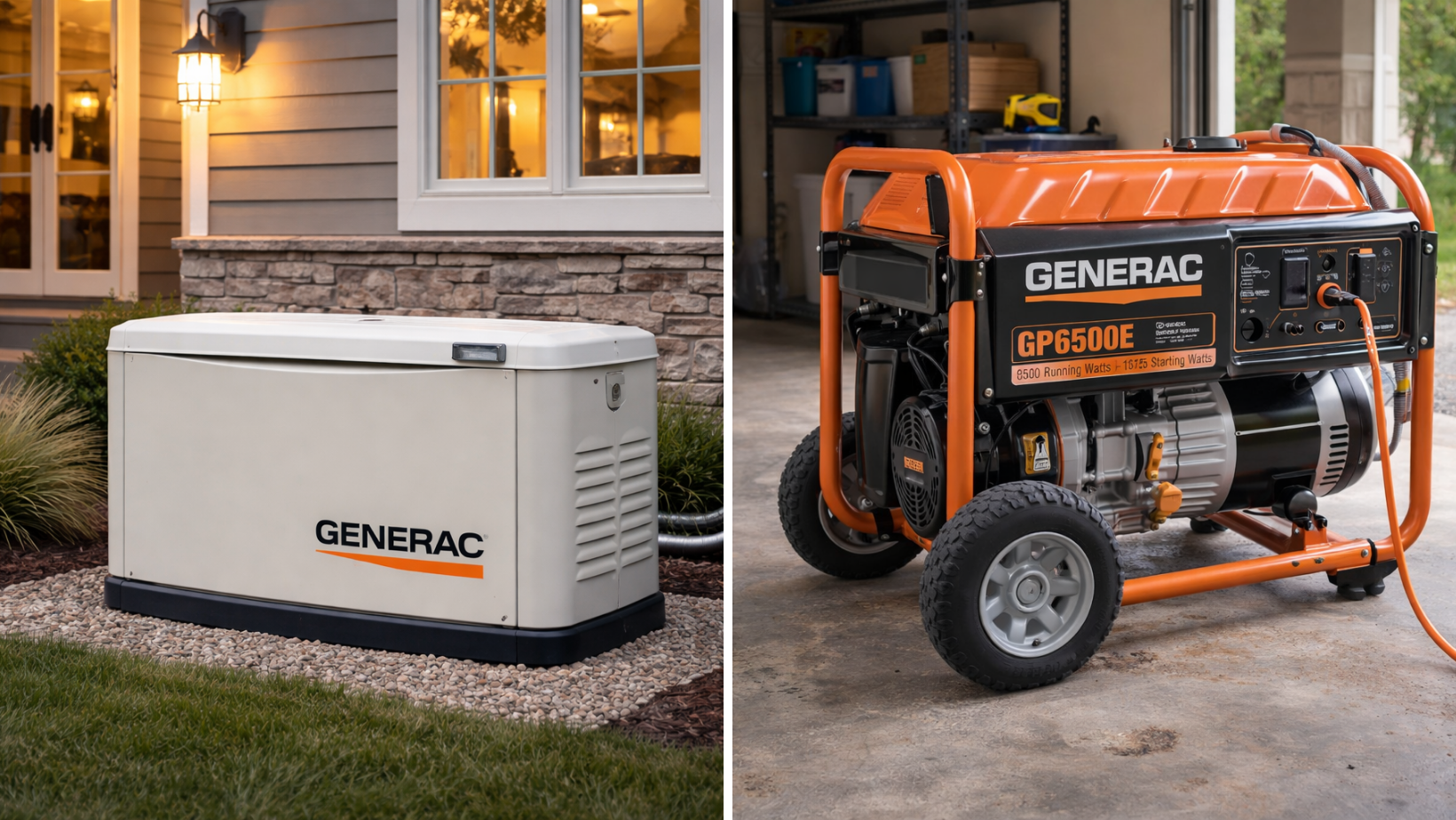
Portable generators are freestanding units you bring out when the power goes off. They usually run on gasoline, propane, or a mix of both, and are rolled or carried outside while in use.
Most of the time, portable generators live in a garage or shed and only come out during an outage or for things like camping and outdoor projects.
During an outage, a portable generator sits outside and connects to your home via heavy-duty extension cords or a manual transfer switch, supplying power to a few selected circuits.
The biggest advantage of a portable generator is the cost. Many portable units cost hundreds to a few thousand dollars and do not require permanent installation.
The tradeoff is that they ask more from you during a storm. You need to move the generator outside, add fuel, start it, and manage cords or the transfer switch whenever the power drops. For longer outages, you also need to plan for fuel storage and tank refills, which is one reason some homeowners eventually consider standby options.
Standby Generators
Standby generators stay in a fixed spot outside the home and are wired directly into the electrical system.
Most standby systems run on natural gas or a large propane tank, so they can operate for longer stretches without refueling. Once installed, they turn on by themselves when the power goes out and turn off again when the grid is back.
The big benefit is convenience. You do not have to move equipment around the yard or handle fuel when the weather is bad or when you are away from home.
However, standby generators cost more up front and must be installed by a professional to ensure placement, permits, gas lines, and wiring meet local codes.
Like any major system, they also need routine maintenance to stay ready for the next outage.
| FACTOR | PORTABLE GENERATOR | STANDBY GENERATOR |
|---|---|---|
| Typical upfront cost | Hundreds to low thousands (plus optional switch) | Several thousand, including equipment and installation |
| Operating costs | Ongoing fuel purchases, frequent refills, and maintenance | Scheduled maintenance; fuel from natural gas or a large propane tank |
| Power capacity | Essentials only: selected circuits/appliances | Can be sized for partial or whole‑home backup |
| Setup & operation | Manual setup, cords, or a manual transfer switch | Automatic start and transfer, no manual work during outages |
| Fuel & runtime | Gas/propane cans or cylinders, shorter runtimes per tank | Connected to a gas supply for extended outages without the need for refueling. |
| Noise & placement | Louder, must be placed outdoors away from openings | Quieter, weather‑enclosed, fixed location with proper clearances |
| Safety factors | Higher CO risk if misused, cord and backfeed hazards | Professionally installed, safer fuel and wiring configuration |
| Best for | Lower budgets, occasional outages, mixed use (home + recreation) | Frequent or long outages, home offices, medical needs, “set it and forget it” comfort |
Choose the Right Generator With Help From CT Electrical Services
Choosing the best generator for home backup power starts with understanding how your home uses electricity.
The right solution depends on your electrical panel, the appliances you want running during an outage, and how hands-off you want the system to be.
CT Electrical Services helps homeowners make that decision with practical guidance and professional installation.
Schedule a home backup power assessment with CT Electrical Services to find the best generator for your home.
